Well-maintained hardwood flooring can last up to 100 years. But they’re sensitive to moisture, residue, and harsh cleaners. You should keep the relative humidity level of your hardwood environment between 35% and 55% to keep your hardwood flooring fresh and safe from cupping and crowning. Even small cleaning and maintenance mistakes can dull the finish or cause warping.
So, what’s the best way to clean hardwood floors safely? The short answer: use gentle cleaners, minimal water, and the right tools for your specific floor type. You also need to follow the right maintenance method to keep them intact.
In this hardwood floor cleaning guide, you’ll learn how to clean and maintain your floors step-by-step. Whether you’ve got solid hardwood or engineered planks, these methods will help you keep them shining, smooth, and damage-free year-round.
1. Daily Hardwood Floor Cleaning Routine
Dust and spills are a common occurrence on your hardwood flooring. So, you should follow the following daily hardwood floor cleaning routine to reduce a heavier workload later.
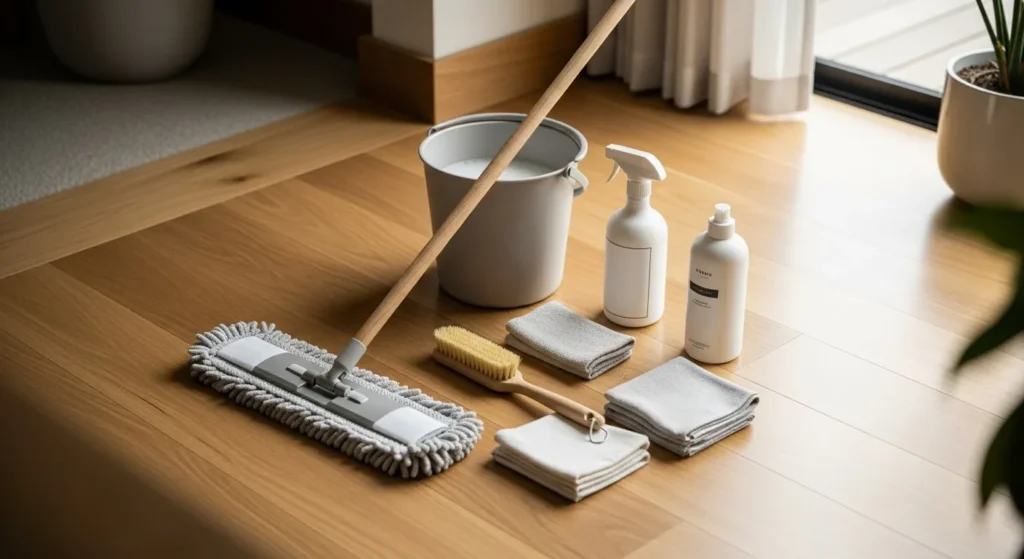
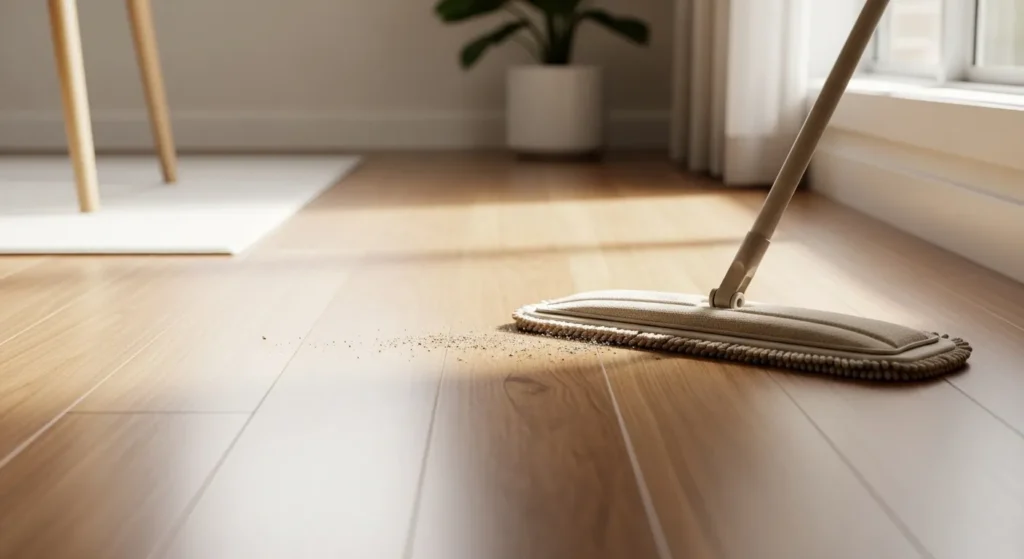
- Step 1: Dust your floors. Use a microfiber or electrostatic dust mop to remove fine particles. This prevents scratches and helps you avoid heavy cleaning later.
- Step 2: Attend spills immediately. Grab a soft cloth and gently clean up with a pH-neutral wood cleaner or a very mild soap solution (like Castile soap diluted).
- Step 3: After cleaning up a spill, dry the area promptly. Do not leave any moisture sitting on the wood.
- Step 4: Keep traffic under control. Consider mats at entries and felt pads under furniture to reduce everyday wear.
2. Step-By-Step Deep Cleaning Methods for Hardwood Floor Cleaning
Every few months, quarterly or biannually, your floors need a deeper refresh to remove buildup and restore the natural glow.
If you are determined to do it yourself, here’s exactly how to do it safely — step by step.
Step 1: Prepare the Floor.
Vacuum your solid hardwood floor thoroughly using a soft-brush attachment. Pay extra attention to corners and under furniture.
Make sure the floor is completely free of grit or dust before applying any liquid. This will ensure your hardwood floor won’t have any scratches during mopping or further cleaning.
This step is particularly crucial for engineered hardwood floors since they are made with a thin solid wood layer, but plywood inside.
Step 2: Mix the Cleaner.
Choose a streak-free wood floor cleaner.
- Fill a bucket with warm water and add an enzyme-based hardwood floor cleaner (follow the dilution ratio on the label, usually ¼ cup per litre of water). Enzyme cleaners help break down organic matter like food, oil, or pet stains without damaging wood finishes.
- Or, in a spray bottle or small bucket, mix warm water with a mild alkaline cleaner (pH 7–9) designed for engineered or laminate wood. Avoid ammonia or harsh solvents — they can cloud the finish.
Aside from commercial cleaning solutions, you can use eco-friendly and natural cleaning alternatives.
- Natural cleaners for wood floors: Mix 2 tsp Castile soap in 1 litre of water — a plant-based surfactant that’s mild on wood. Add a few drops of essential oil (lemon, olive, or tea tree) to the cleaning solution for a mild scent and added cleaning power.
- Eco-friendly wood floor cleaners: Choose biodegradable, non-toxic, low-VOC products with no added artificial fragrance.
Step 3: Dampen the Mop — Don’t Keep It Wet
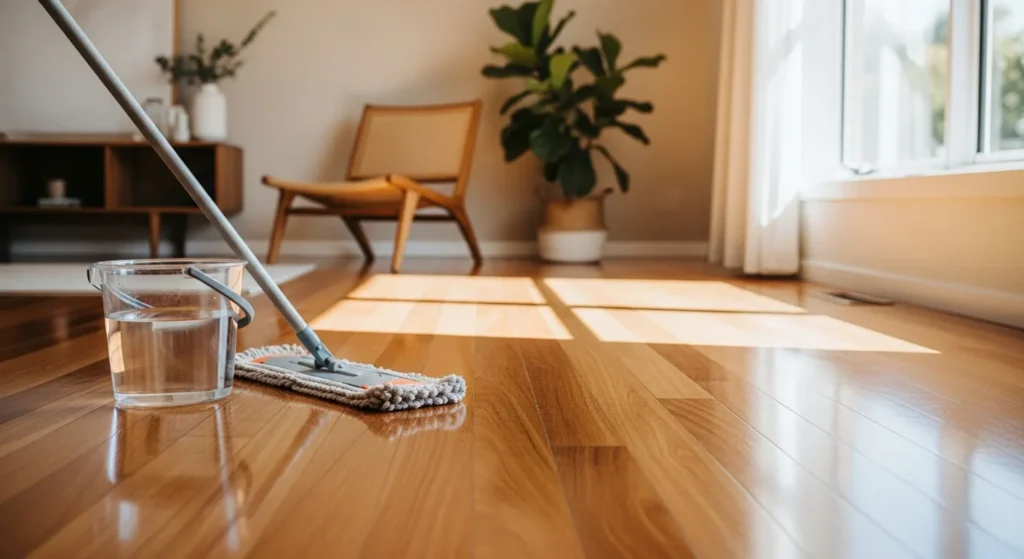
Dip a microfiber mop or mop pad into the solution and wring it until just slightly damp. Too much water can seep into solid wood and cause swelling. A damp mop is safe.
Also, if you can use a spray bottle to spray the solution on the floor, lightly mist one section of the floor — never pour liquid directly.
Step 4: Mop With the Grain
Work in small sections, gliding the mop along the wood grain. Rinse and wring the mop often so you’re not spreading dirt around. Avoid circular motions — they leave streaks.
Step 5: Address Stubborn Spots
For sticky areas or light stains, spray a little more cleaner directly on the spot. Let it sit for 20–30 seconds, then wipe with firm but gentle pressure. If needed, use a nylon scrub pad (non-abrasive type).
Step 6: Dry the Floor Immediately
After mopping one section, go back over it with a dry microfiber cloth or towel to remove any leftover moisture. Do it immediately after using the damp mop. Otherwise, the floor can be streaked. The surface should be fully dry within a few minutes.
Step 7: Do a Low-moisture Steam Refresh (Optional)
If your engineered floor is fully sealed, you can use a low-moisture steam mop on its lowest setting. Keep the head moving and don’t linger in one spot. Skip this step if unsure about the finish.
Step 8: Buff the Hardwood Floor for Shine
Once the whole floor is clean and dry, run a clean, dry microfiber mop or buffer pad across the floor to restore the natural finish.
3. How to Remove Stains and Scratches
Sometimes, despite good care, stains or scratches happen. Also, after cleaning, stubborn stains may not disappear.
In this situation, you can follow the following tips for removing stains from wood floors.
- Water stains: Blot immediately. Later, dab gently with a cloth and hydrogen peroxide 3%. Don’t soak.
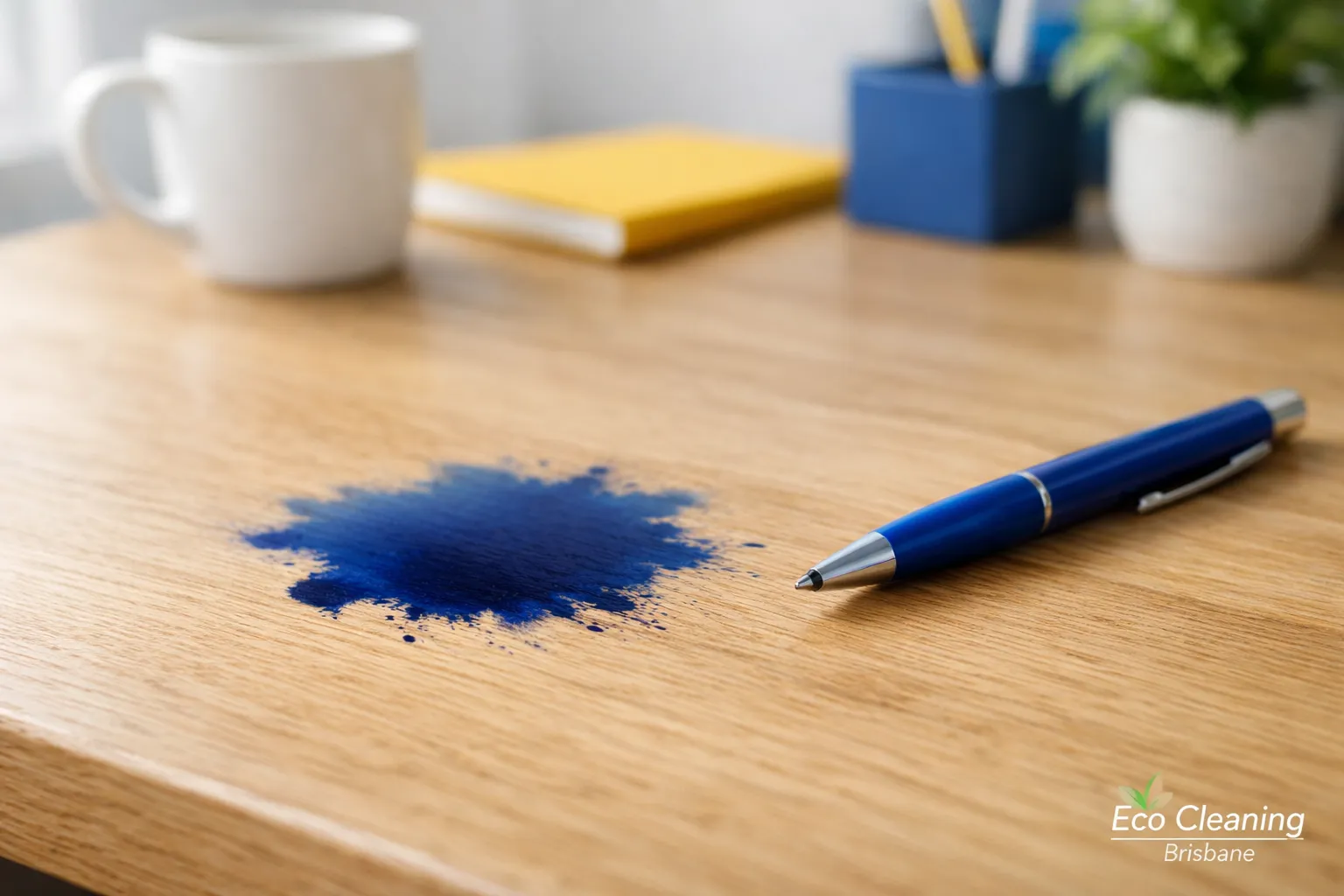
- Grease or ink stains: Use a soft cloth with diluted isopropyl alcohol (about half alcohol, half water) and wipe gently.
- Light scratches: Apply walnut oil on minor surface marks. Rub gently with a microfiber cloth along the grain.
- Deeper scratches or gouges: For solid hardwood, you can lightly sand the scratch and reapply the finish. For engineered wood, treat carefully and consider professional help.
- Dark marks: These require professional refinishing or application of a wood stain pen if superficial.
4. Maintenance Tips for Preventing Hardwood Floor Damage
Keeping your floors beautiful isn’t just about cleaning — it’s about habits that stop damage before it starts. A clear hardwood floor maintenance schedule keeps scratches, dull spots, and moisture issues under control.
- Check high-traffic areas — like hallways or kitchen entryways — for dull spots or fine debris monthly. Apply a quick polish or buffing to keep the finish intact.
- Inspect for new scratches, gaps, or loose boards. Homes with kids or pets usually show these first. Fix these issues by hiring professionals.
- Add felt pads under all furniture legs — they stop drag marks and dents.
- Use breathable mats or rugs near entryways to trap grit before it reaches your floor.
- Skip rubber-backed rugs — they trap moisture and can stain the finish.
- Keep pet nails trimmed to avoid claw marks.
- Maintain indoor humidity between 35–55% to prevent gapping or warping.
- Avoid walking on hardwood floors with high heels or hard soles. These can dent or crack the surface.
5. Common Hardwood Floor Care Mistakes to Avoid
Here are some common missteps that many homeowners make. You should avoid them to keep your hardwood floor intact.
- Using a steam mop or string mop on unsealed or solid hardwood floors (risk: moisture penetration).
- Leaving standing water on the floor after mopping (risk: warping or finish damage).
- Using household detergents, baking soda, or vinegar (risk: strip the finish or leave a film).
- Applying polish without first cleaning the surface (risk: sealing in dirt or debris).
- Ignoring small scratches or damage that later become moisture traps and worsen.
- Not using protective measures (felt pads, rugs) in high-traffic zones.
If you steer clear of these mistakes, your floor will thank you for how long it stays looking great.
Hardwood Floor Cleaning FAQs
What is the best wood floor cleaner for sealed hardwoods?
Choose a pH-neutral, water-based formula with mild surfactants (like ethoxylated alcohols). It should leave no residue and provide hardwood floor streak-free cleaning.
Does vinegar dull hardwood floors?
Yes— vinegar and baking soda can dull your hardwood floors. Ultimately, this can ruin your floor.
How often should I polish or wax hardwood floors?
For sealed surfaces, polish every 2-3 months or as needed. For waxed/unfinished wood, polish (i.e., wax) only once or twice a year with proper care.
Should hardwood floors be wet mopped?
No, you should not wet mop your hardwood floors. Excess water will ultimately damage your hardwood floor surface.
Final Words
Your hardwood floors deserve gentle care and regular attention. With the right routine cleaning, you’ll preserve both beauty and durability.
If you ever feel your floors need professional support or eco-friendly treatment, call our team at Eco Brisbane. We have been providing cleaning services for over 20 years, serving the entire Brisbane area. Call us at +61 7 3189 2759 or email info@ecobrisbane.com.au. We will help you keep your floor shining and healthy.